SLO County Market Update & Article on Solid Foundations for Your Home
*INTERESTING FACT –
Proximity to water is associated with lower heart rates, reduced blood pressure, and decreased levels of the stress hormone cortisol. This psychological phenomenon is called the “Blue Mind” effect.
Solid Foundations
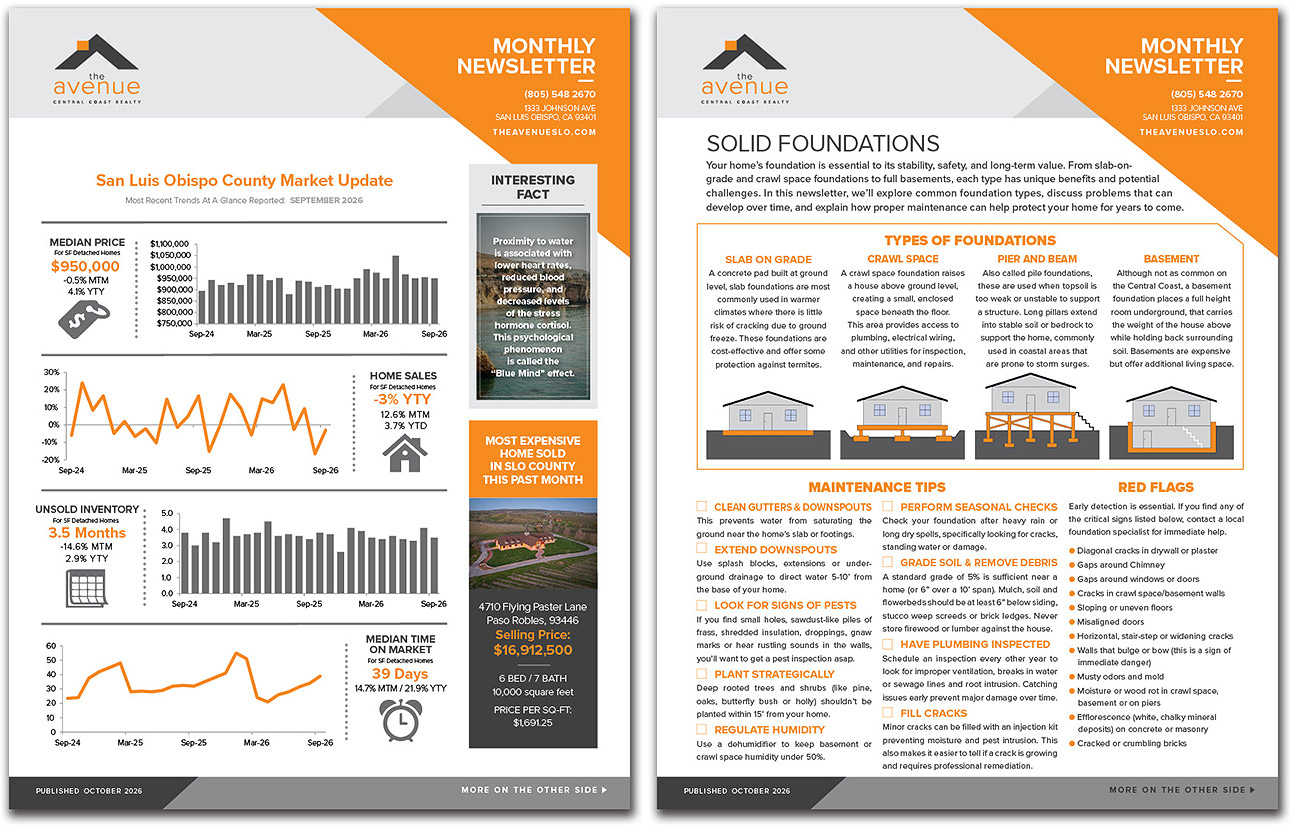
Your home’s foundation is essential to its stability, safety, and long-term value. From slab-on-grade and crawl space foundations to full basements, each type has unique benefits and potential challenges. In this newsletter, we’ll explore common foundation types, discuss problems that can develop over time, and explain how proper maintenance can help protect your home for years to come.
TYPES OF FOUNDATIONS
 SLAB ON GRADE
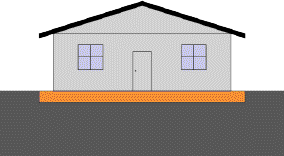 SLAB ON GRADE
A concrete pad built at ground level, slab foundations are most commonly used in warmer climates where there is little risk of cracking due to ground freeze. These foundations are cost-effective and offer some protection against termites.
 CRAWL SPACE
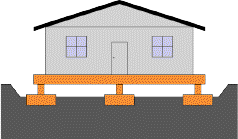 CRAWL SPACE
A crawl space foundation raises a house above ground level, creating a small, enclosed space beneath the floor. This area provides access to plumbing, electrical wiring, and other utilities for inspection, maintenance, and repairs.
 PIER AND BEAM
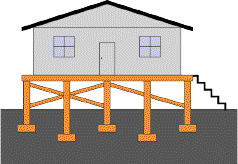 PIER AND BEAM
Also called pile foundations, these are used when topsoil is too weak or unstable to support a structure. Long pillars extend into stable soil or bedrock to support the home, commonly used in coastal areas that are prone to storm surges.
 BASEMENT
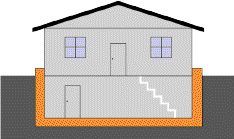 BASEMENT
Although not as common on the Central Coast, a basement foundation places a full height room underground, that carries the weight of the house above while holding back surrounding soil. Basements are expensive but offer additional living space.
MAINTENANCE TIPS
- Clean Gutters & Downspouts
This prevents water from saturating the ground near the home’s slab or footings. - Extend Downspouts
Use splash blocks, extensions or underground drainage to direct water 5-10’ from the base of your home. - Look For Signs of Pests
If you find small holes, sawdust-like piles of frass, shredded insulation, droppings, gnaw marks or hear rustling sounds in the walls, you’ll want to get a pest inspection asap. - Plant Strategically
Deep rooted trees and shrubs (like pine, oaks, butterfly bush or holly) shouldn’t be planted within 15’ from your home. - Regulate Humidity
Use a dehumidifier to keep basement or crawl space humidity under 50%. - Perform Seasonal Checks
Check your foundation after heavy rain or long dry spells, specifically looking for cracks, standing water or damage. - Grade soil & REMOVE Debris
A standard grade of 5% is sufficient near a home (or 6” over a 10’ span). Mulch, soil and flowerbeds should be at least 6” below siding, stucco weep screeds or brick ledges. Never store firewood or lumber against the house. - Have Plumbing Inspected
Schedule an inspection every other year to look for improper ventilation, breaks in water or sewage lines and root intrusion. Catching issues early prevent major damage over time. - Fill Cracks
Minor cracks can be filled with an injection kit preventing moisture and pest intrusion. This also makes it easier to tell if a crack is growing and requires professional remediation.
RED FLAGS
Early detection is essential. If you find any of the critical signs listed below, contact a local foundation specialist for immediate help.
- Diagonal cracks in drywall or plaster
- Gaps around Chimney
- Gaps around windows or doors
- Cracks in crawl space/basement walls
- Sloping or uneven floors
- Misaligned doors
- Horizontal, stair-step or widening cracks
- Walls that bulge or bow (this is a sign of immediate danger)
- Musty odors and mold
- Moisture or wood rot in crawl space, basement or on piers
- Efflorescence (white, chalky mineral deposits) on concrete or masonry
- Cracked or crumbling bricks